
Ranunculus is the first spring focal flower to bloom, and it can take a little more work than most flowers to get started. They can seem a little intimidating to grow at first, but starting ranunculus corms is actually pretty straightforward once you get the hang of it. Here’s a guide of what we do at our York PA (zone 6b/7a) flower farm to successfully grow and overwinter them.
Step 1: Soak
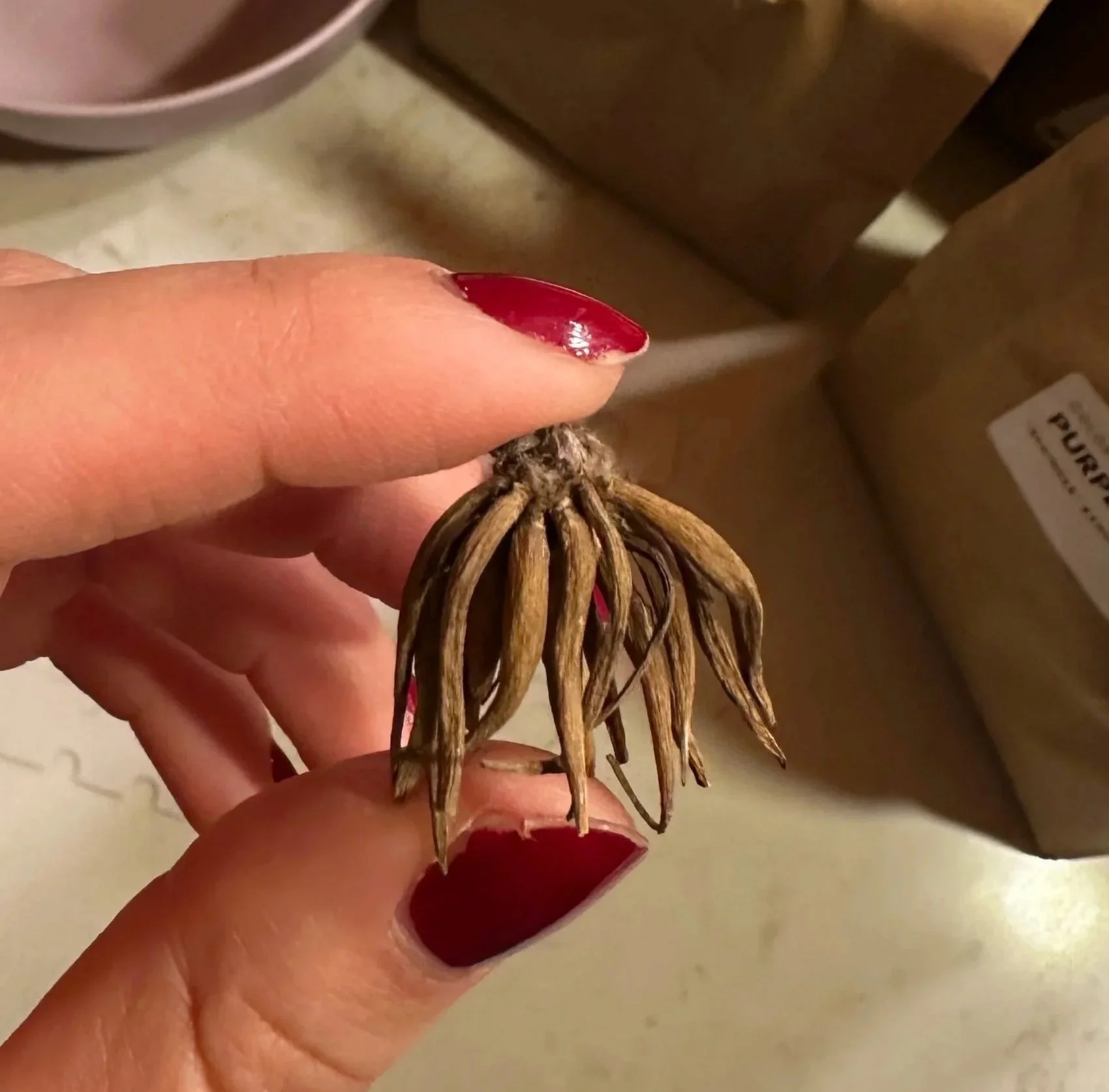
When you get your ranunculus corms (bulbs), they’ll look a little like tiny dried octopus, and they need to rehydrate before planting. I soak mine in room-temperature water for about 3 to 4 hours. You don’t want to leave them soaking for too long because they can risk rotting. I separate mine in different bowls or buckets by variety so they don’t get mixed up.
Step 2: Pre-Sprout
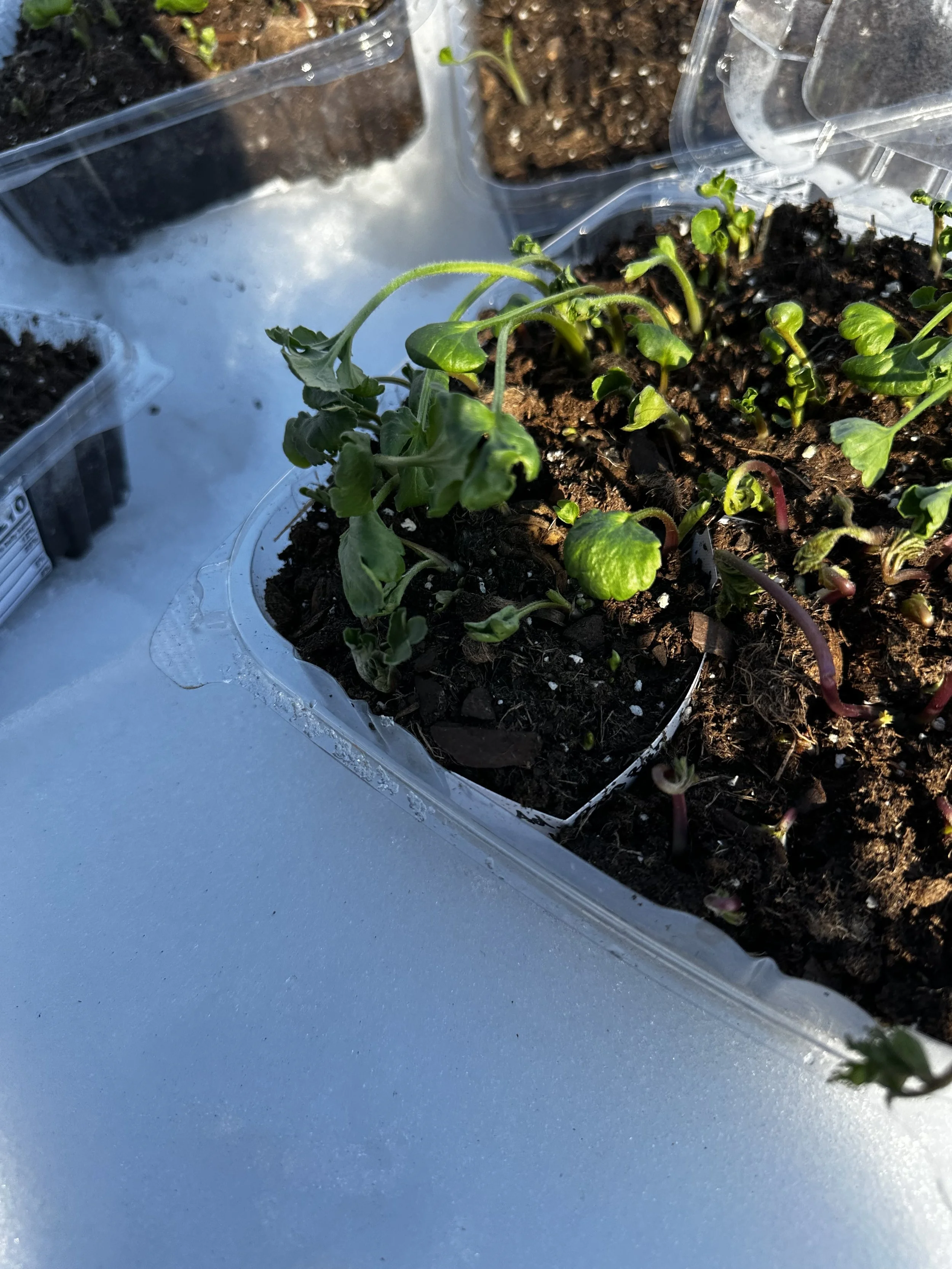
After soaking, I place my corms in 1020 trays to pre-sprout and grow roots before planting them outside. Use moist, but not wet, potting mix or whatever soil you have on hand. Cover them just to the top of the corms. They can be in the dark until they start sprouting, and then they’ll need to go under grow lights if you keep them inside longer. You can plant them when they just have tiny shoots, or you can grow them on for a little longer. The goal is to let them develop a healthy root system and little green shoots inside where it’s warmer. This gives the plants a head start and helps me get them established before they have to deal with the winter weather outside.
Step 3: Plant
I plant my ranunculus 5 inches apart. You can plant them individually if you let them grow tall shoots, but if you’re planting them in rows you can make a trench with a garden hoe for each row, space them 5 inches apart, and fill the trench in. Give them a water once you’re done. I do two successions: one in November and another in January. Splitting them up helps spread out the harvest instead of having everything bloom at once.
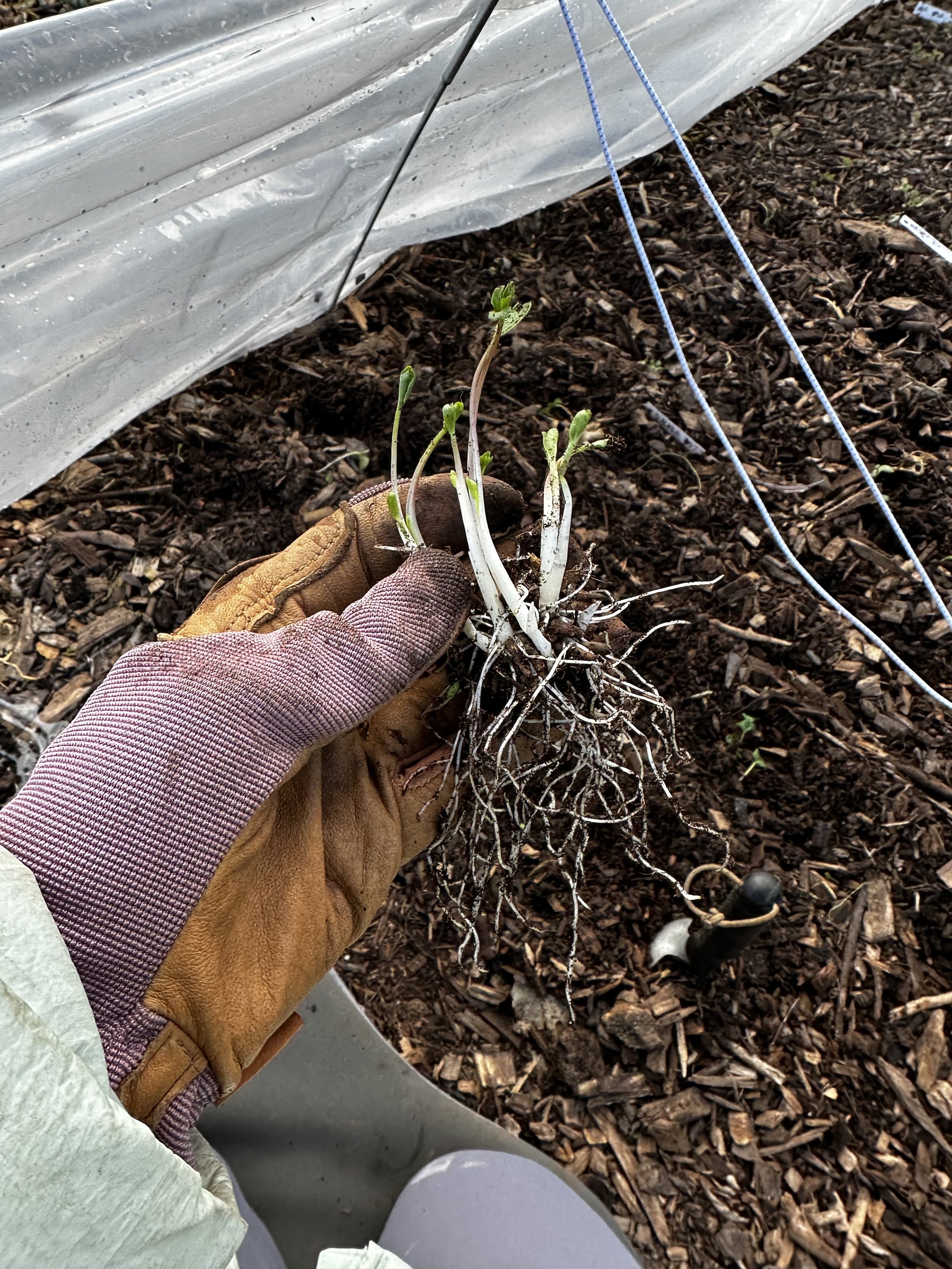
I cover mine with low tunnels covered with greenhouse plastic since ranunculus are not cl-hardy in my zone. Using plastic instead of frost cloth will keep them from freezing since it offers more protection. Ranunculus are cool-season flowers, so the low tunnel helps protect them from the cold while allowing me to grow them earlier than I could without protection. I have planted them in March before as bigger transplants, but the harvest can season get very short at that point since they flower later and stop flowering in June when it gets too warm for them.
Now that you’ve planted, just check on them time to time over the winter. When you get a heavy snowfall brush it off the plastic so the weight doesn’t collapse the tunnel. If you get warm days, over 50 F, make sure you open the tunnel so it doesn’t get too hot in there.
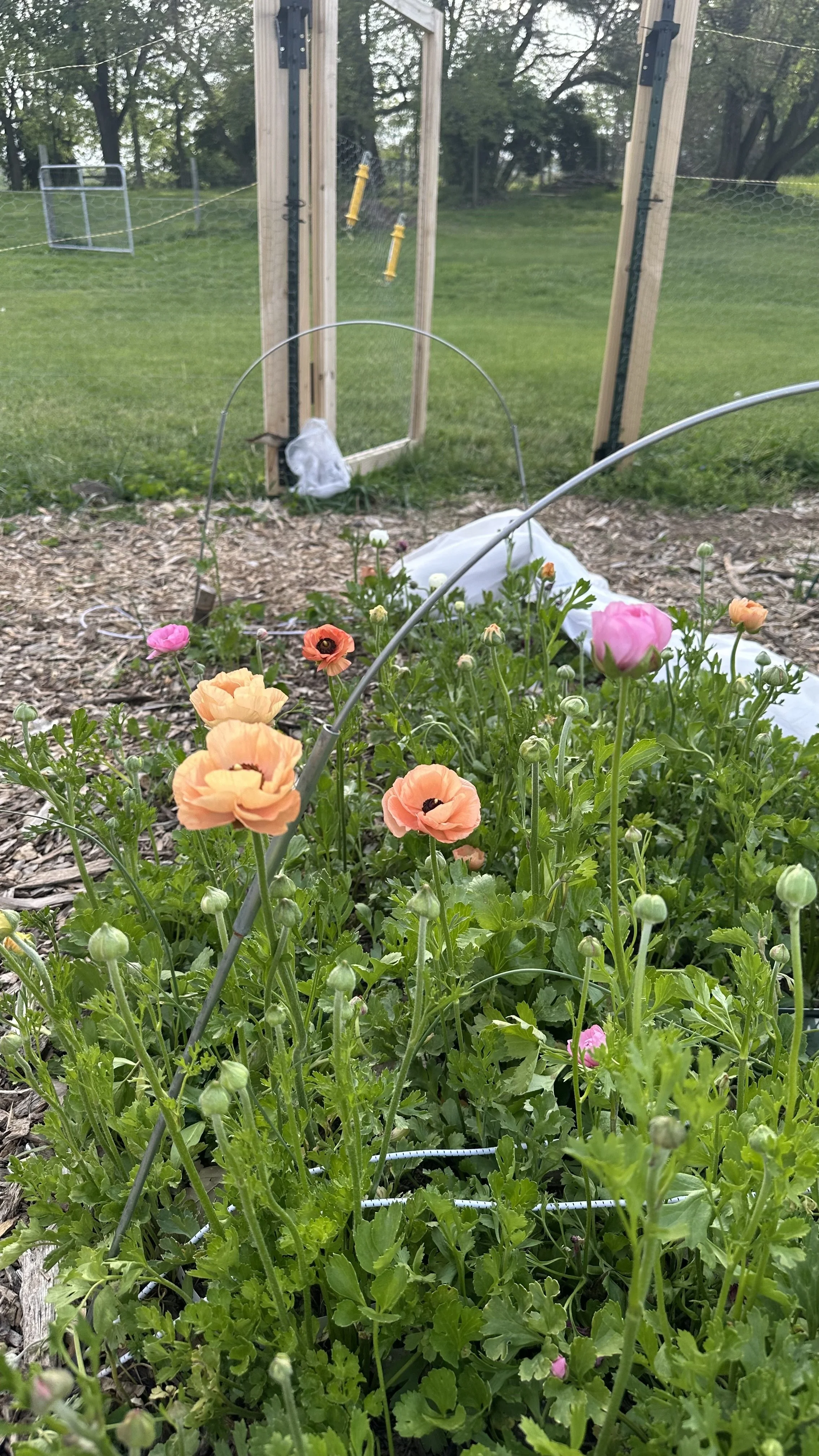
You can find ranunculus corms on our shop page here. Good luck and enjoy your spring blooms!
